No More Spreadsheets: Modern Multi-Cloud Budget Management


Cloud budgeting shouldn't feel like firefighting.
Yet for most enterprises managing multi-cloud environments, that's exactly what it is, scrambling between dashboards, consolidating spreadsheets, and discovering overruns after the damage is done.
Cloud providers offer budgeting tools. But they were built for single-cloud simplicity. Not enterprise complexity.
The result? Finance teams lack visibility. Engineering gets surprised by bills. Leadership can't make informed decisions.
There's a better way.
The Fragmentation Problem No One Talks About
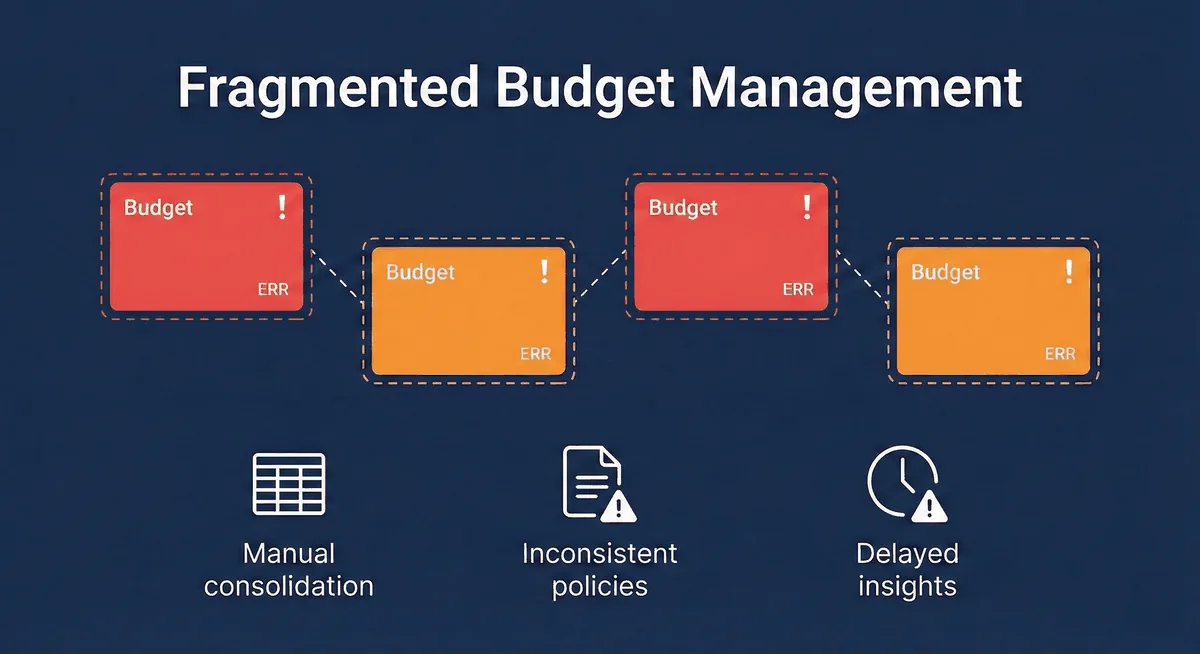
Every cloud provider wants to be your single source of truth. The problem? Your infrastructure doesn't work that way.
When budgets live in silos, organizations face:
- Blind spots: No unified view of total cloud spend
- Manual overhead: Hours consolidating data across providers
- Inconsistent policies: Different rules for different clouds
- Delayed insights: Problems discovered after budgets are blown
- Governance gaps: No approval workflows or audit trails
One enterprise we worked with spent 40+ hours monthly just reconciling cloud costs across three providers. That's not financial management, that's busywork.
Rethinking Cloud Budget Management
What if your budgets aligned with how your business operates, not how your cloud accounts are structured?
That's the approach behind SKYXOPS Budget Management.
1. Align Budgets to Your Business, Not Your Accounts
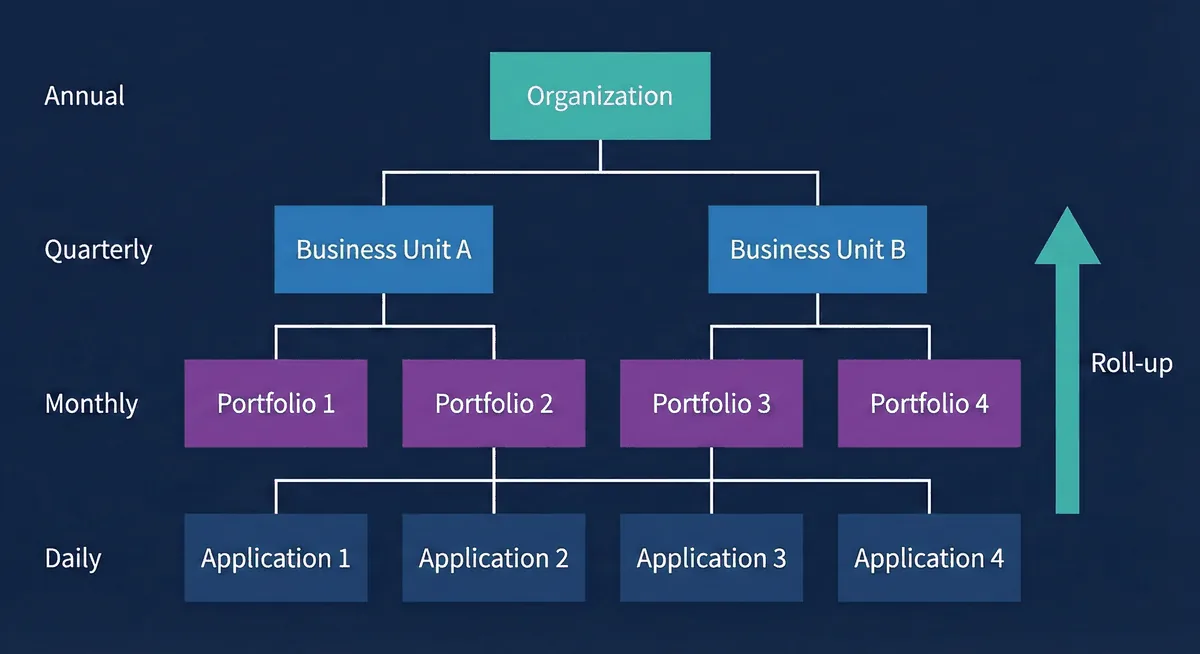
Traditional cloud budgets are tied to accounts, subscriptions, or projects. But your business thinks in business units, products, and applications.
SKYXOPS lets you create budgets that mirror your organizational structure:
Organization Business Unit Portfolio Product Application
Organization-Level
Create annual budgets at the organization level for strategic planning.
Business Unit Breakdown
Break down into quarterly budgets by business unit.
Product Granularity
Drill into monthly budgets by product or application.
Automatic Roll-ups
Parent-child relationships cascade changes instantly.
Example scenario: a global fintech running workloads across multiple clouds aligns budgets by product line instead of accounts, cutting reconciliation effort by around 60% and stopping the $200K quarterly overruns that used to slip through.
2. One Dashboard. Every Cloud. Complete Visibility.
Stop switching between consoles. SKYXOPS consolidates spending across all providers into a single, unified view.
| Dimension | What You See |
|---|---|
| Vendor | Which cloud is driving costs |
| Service | Expensive services like compute, storage, databases |
| Category | Spending by compute, network, analytics |
| Region | Geographic cost distribution |
No spreadsheet gymnastics. No manual consolidation. Complete data at your fingertips.
3. Thresholds That Match Your Reality
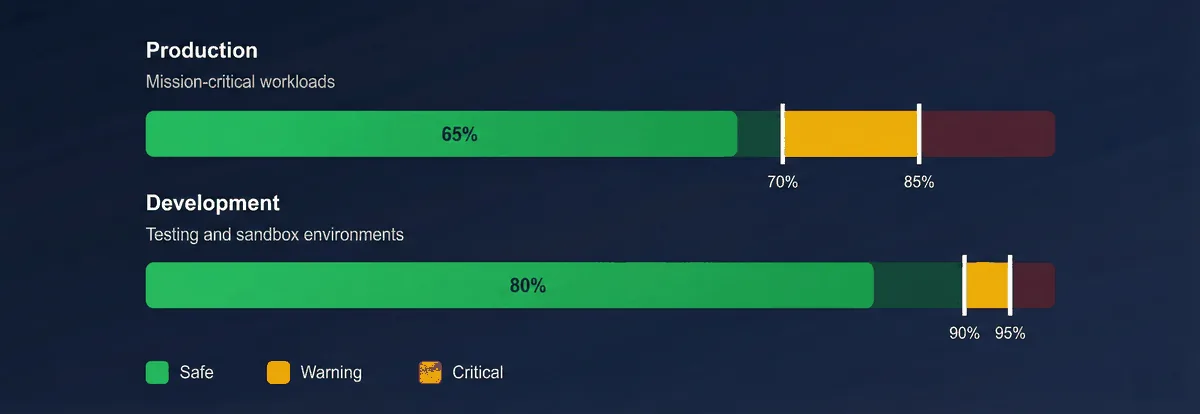
Not all workloads are equal. A production system and a dev sandbox shouldn't have the same budget rules.
With SKYXOPS, you set custom warning and critical thresholds for each budget:
70% Warning
For mission-critical production workloads
90% Threshold
For development environments
85% Critical
For budgets needing immediate attention
Your finance team defines the rules. Engineering gets the alerts. No more one-size-fits-all percentages.
Example scenario: a healthcare SaaS provider sets 65%/80% thresholds for HIPAA-compliant workloads while leaving room for R&D, catching a $45K runaway instance before it hits production budgets.
4. Tag-Based Resource Mapping
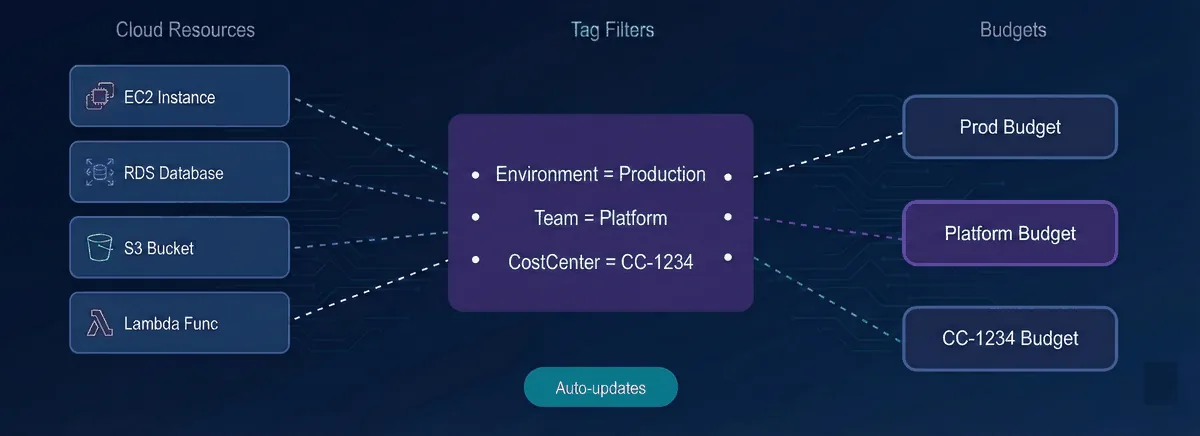
Cloud accounts change. Resources move. Teams reorganize. Your budgets shouldn't break every time that happens.
SKYXOPS connects budgets to spending through tags, not rigid account mappings:
- Define filters like
Environment = Production - Or
Team = Platform Engineering - Automatically track matching resources across every cloud
When resources reorganize, budgets update automatically. No manual remapping. No missed costs.
5. Real-Time Spend Tracking
Annual budgets are great for planning. But waiting 12 months to know if you're on track isn't.
| Metric | Purpose |
|---|---|
| Daily Spend | Catch anomalies immediately |
| Month-to-Date | Stay on monthly targets |
| Quarter-to-Date | Align with business reviews |
| Year-to-Date | Track annual progress continuously |
See trends as they develop. Identify problems before they become overruns. Course-correct while there's still time.
6. Governance Built In, Not Bolted On
Budget management is about more than tracking numbers. It is about accountability. This is where FinOps best practices start to matter.
Draft
Configure before going live
Pending Approval
Route to stakeholders
Active
Track actuals in real-time
Closed
Archive for reporting
Every status change tracked. Every approval logged. Parent budgets can't close while children are active, making sure hierarchy integrity.
Real-World Impact: A Fortune 500 retailer met SOX compliance requirements, reducing audit prep from 3 weeks to 4 days with complete approval trails.
7. Alerts That Drive Action
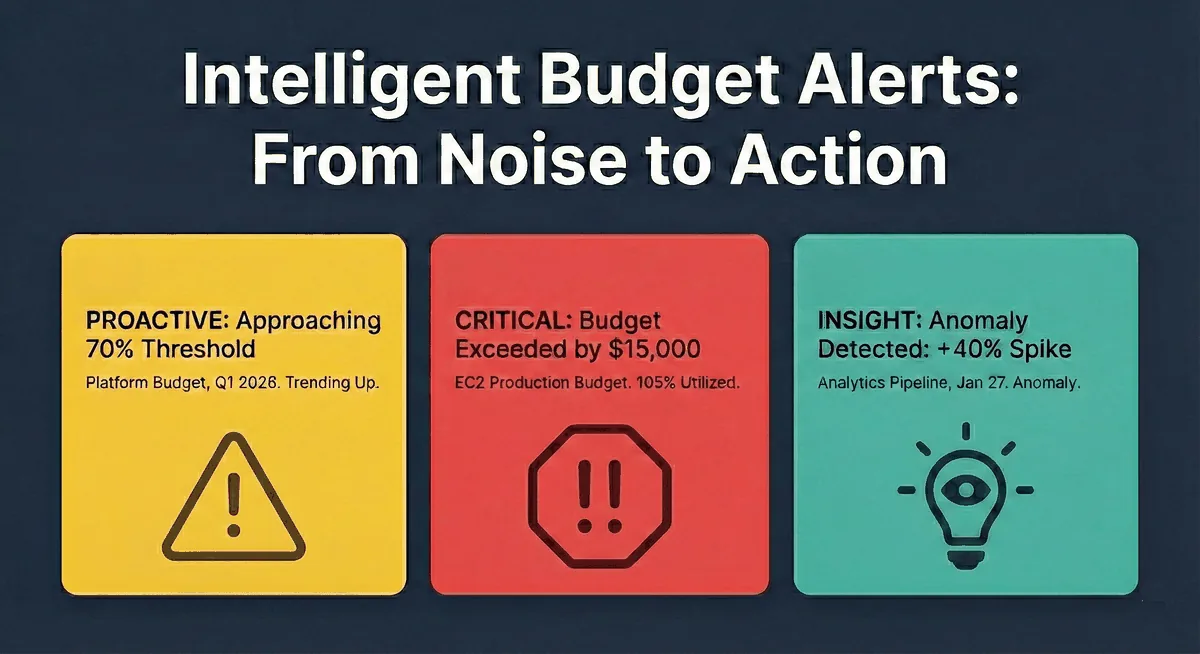
An alert saying "you've exceeded your budget" isn't helpful. It's too late.
Proactive Warnings
Fire when approaching thresholds, not after you've blown past them.
Context-Rich Notifications
Show exactly which budget, how much over, current percentage.
Severity Levels
Distinguish monitoring needs from immediate action.
Usable Insights
Clarify if it's a spike, trend, or anomaly.
Know what's happening. Why it matters. What to do about it.
The Bottom Line
Cloud-native budgets work fine for simple, single-cloud environments.
But if you're managing multi-cloud infrastructure, supporting multiple business units, and answering to stakeholders who expect real visibility and governance: you need more.
SKYXOPS Budget Management Delivers:
| Capability | Benefit |
|---|---|
| Unified visibility | All clouds in one dashboard |
| Business-aligned hierarchy | Organization to application |
| Flexible periods | Annual, quarterly, monthly |
| Custom thresholds | Per-budget warning & critical |
| Tag-based mapping | Adapts as infrastructure changes |
| Real-time tracking | Daily, MTD, QTD, YTD |
| Complete governance | Approval workflows + audit trails |
| Intelligent alerts | Action before overruns |
Stop managing budgets in silos.
Start managing them like the strategic business function they are.
Get a Demo